Black Wall Street
Was Black Wall Street Rebuilt? What Greenwood Built After 1921
Black Wall Street Travel · October 28, 2026 · 7 min read
Short answer
Yes. After the 1921 Tulsa Race Massacre destroyed most of the Greenwood District, Black Tulsans rebuilt it themselves, with little help from the city or county. By 1942 Greenwood had 242 Black-owned and Black-operated businesses, and historian Hannibal B. Johnson dates its peak to the early to mid 1940s. The district declined later, from the 1960s on.
What happened to Black Wall Street in 1921?
Over May 31 and June 1, 1921, a white mob destroyed most of Greenwood, the Black district of Tulsa whose main street people called Black Wall Street. The Oklahoma Commission to Study the Tulsa Race Riot of 1921 found that homes "credibly estimated to have numbered 1,256" were burned, along with churches, schools, businesses, a hospital and a library. The Commission concluded that many people, "likely numbering between one and three hundred," were killed. Roughly 35 to 40 square blocks were destroyed.
Most people know that part. It's also where most tellings stop, which leaves out the next twenty years and the people who lived them.
By 1921 Tulsa's Black population had grown to almost 11,000, and most of them lived in North Tulsa, in and around Greenwood. According to the Commission's report, the district had doctors, dentists, lawyers, two schools, a library, a hospital and two newspapers, the Tulsa Star and the Oklahoma Sun. These were people who had already built one Black business district from the ground up. They knew how to do it, and they did it again.
"A lot of people I talk with don't understand that the Greenwood community was destroyed, but it was rebuilt."Hannibal B. Johnson, Historian and author of Black Wall Street: From Riot to Renaissance in Tulsa's Historic Greenwood District · Speaking to the Tulsa Regional Chamber, as reported by Elizabeth Caldwell, Public Radio Tulsa, May 18, 2021
How did Greenwood rebuild after the massacre?
Greenwood's own residents rebuilt it, and they started almost at once. The Commission's report puts it directly: "the restoration of Greenwood after its systematic destruction was left to the victims of that destruction." City and county government bore much of the cost of Red Cross relief. Neither put much toward rebuilding.
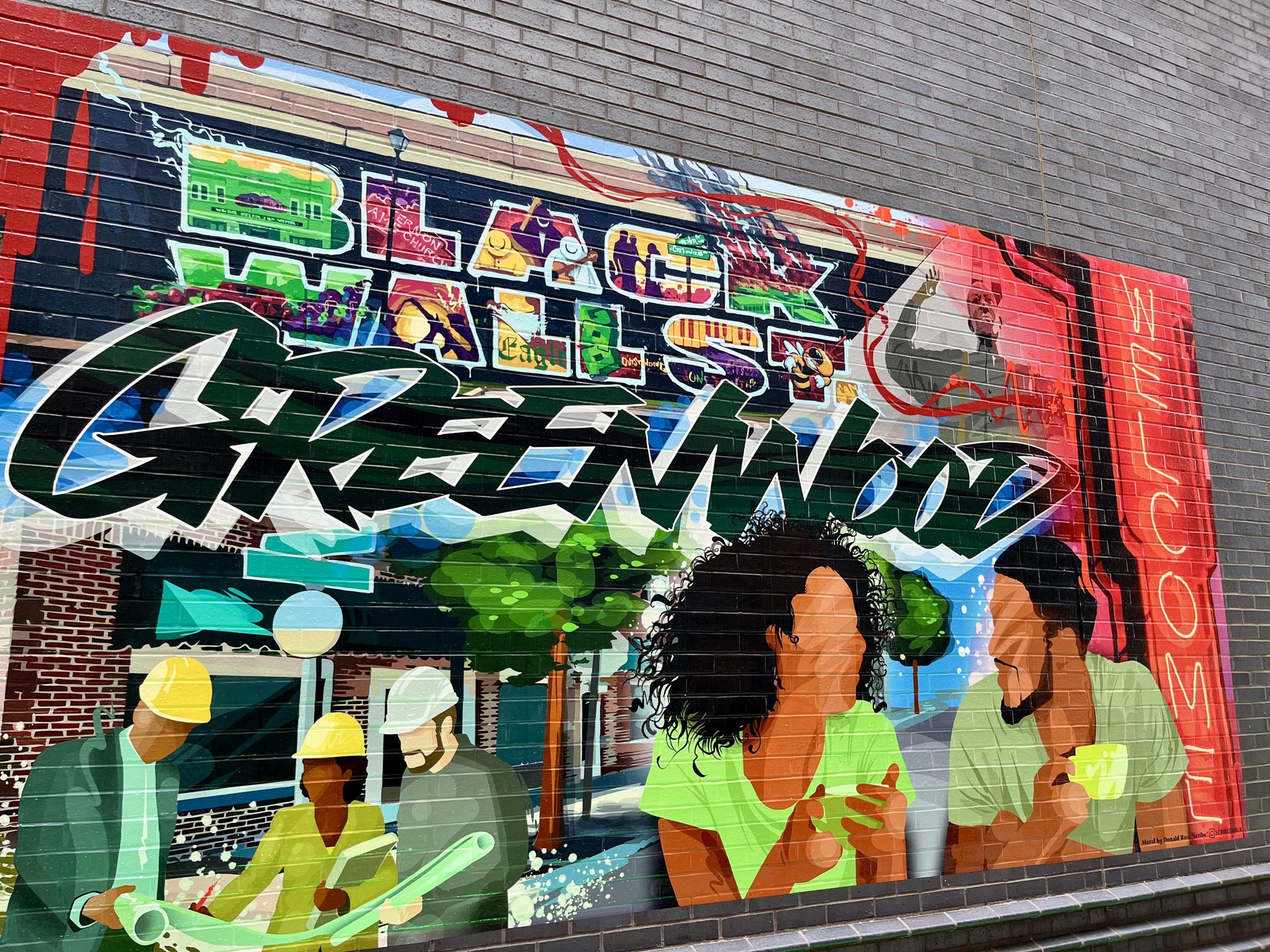
The city tried to stop it. On June 7, 1921, six days after the massacre, the Tulsa City Commission passed a fire ordinance written to keep the Black commercial district from being rebuilt where it had stood. The ordinance didn't hold up in court, and Black Tulsans went ahead.
By early July 1921 the city was issuing building permits to Black residents of North Tulsa. O.W. Gurley got one on July 2, for a one-story brick building. Historian Larry O'Dell, writing in the Commission's report, notes that the "Deep Greenwood" business owners were generally the first to rebuild, and that more permits likely went to individual families as the winter of 1921 came on. Some congregations took years to finish their churches.
City directories kept count. They listed 191 Black businesses in Greenwood just before the massacre and 120 in 1922. By 1942, by Hannibal B. Johnson's count, there were 242.
Black businesses in Greenwood
| Year | Businesses |
|---|---|
| 1920 | 159 |
| 1921 (before) | 191 |
| 1922 (after) | 120 |
| 1942 | 242 |
Note: the 1942 count comes from a different source and method than the 1920 to 1922 counts, so read the chart as a direction of travel, not an exact year-over-year comparison.
When was Black Wall Street at its peak?
In the early to mid 1940s, about two decades after the massacre. That's how Hannibal B. Johnson dated it when he spoke to the Tulsa Regional Chamber in 2021, and his entry for the Oklahoma Historical Society puts the district at 242 Black-owned and Black-operated businesses by 1942.
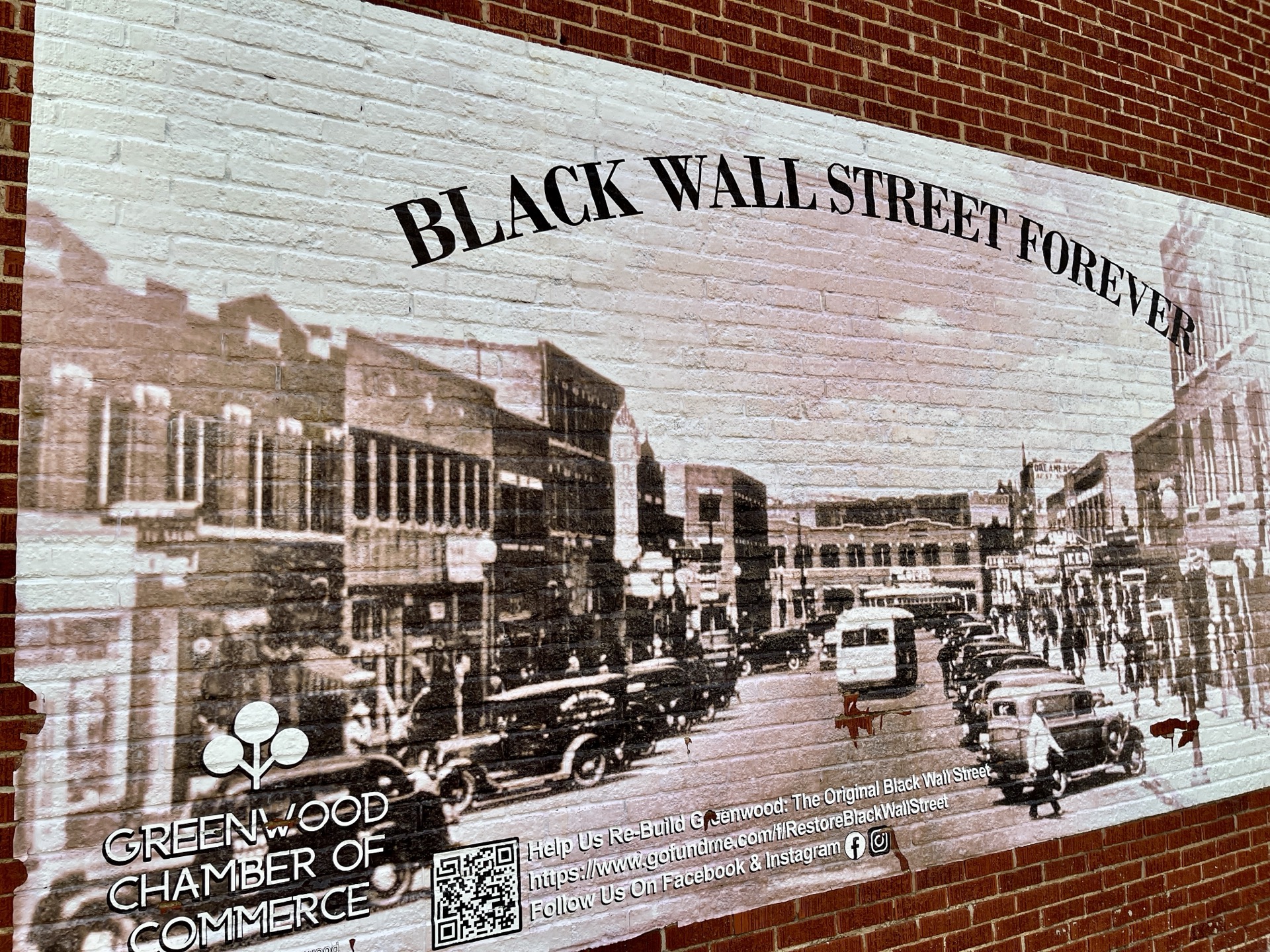
So the Black Wall Street at its height was the rebuilt one.
The Commission's report says the people of Greenwood "not only thrived in an era of harsh 'Jim Crow' and oppression," but after the destruction they "worked together and rebuilt," ran their businesses again, schooled their children and worshiped in their churches. All of that happened while segregation was still the law and the Ku Klux Klan was growing in Oklahoma.
That's a big part of why Tulsa comes first for us. As Gina Woods, our founder, put it when she introduced our Tulsa trip in September 2026: "Well, when we talk about Tulsa, we're talking about ownership. Tulsa is the foundation of Black Wall Street Travel."
What happened to Greenwood after the 1940s?
Greenwood declined slowly, over decades, and this time fire had nothing to do with it. Johnson's Oklahoma Historical Society entry names four causes: integration, urban renewal, a new business climate, and the aging of the district's early pioneers. He dates the decline from the 1960s through the 1970s and into the early 1980s. By the end of the twentieth century, he writes, few businesses remained.
Urban renewal cleared property in North Greenwood, and the Commission's report notes that much of that land went to the highway and to Rogers State University, now OSU-Tulsa. Construction of Interstate 244, which began in the late 1960s, put a highway through the district, and advocates have tied the neighborhood's long-term decline to it, as Public Radio Tulsa reported in 2025. The highway still runs over Greenwood today. In 2025 Tulsa's mayor said the city should consider changing or removing that stretch.
We tell this part too, because it's on the record. The decline came decades after 1921, and for different reasons.
Can you visit Black Wall Street today?
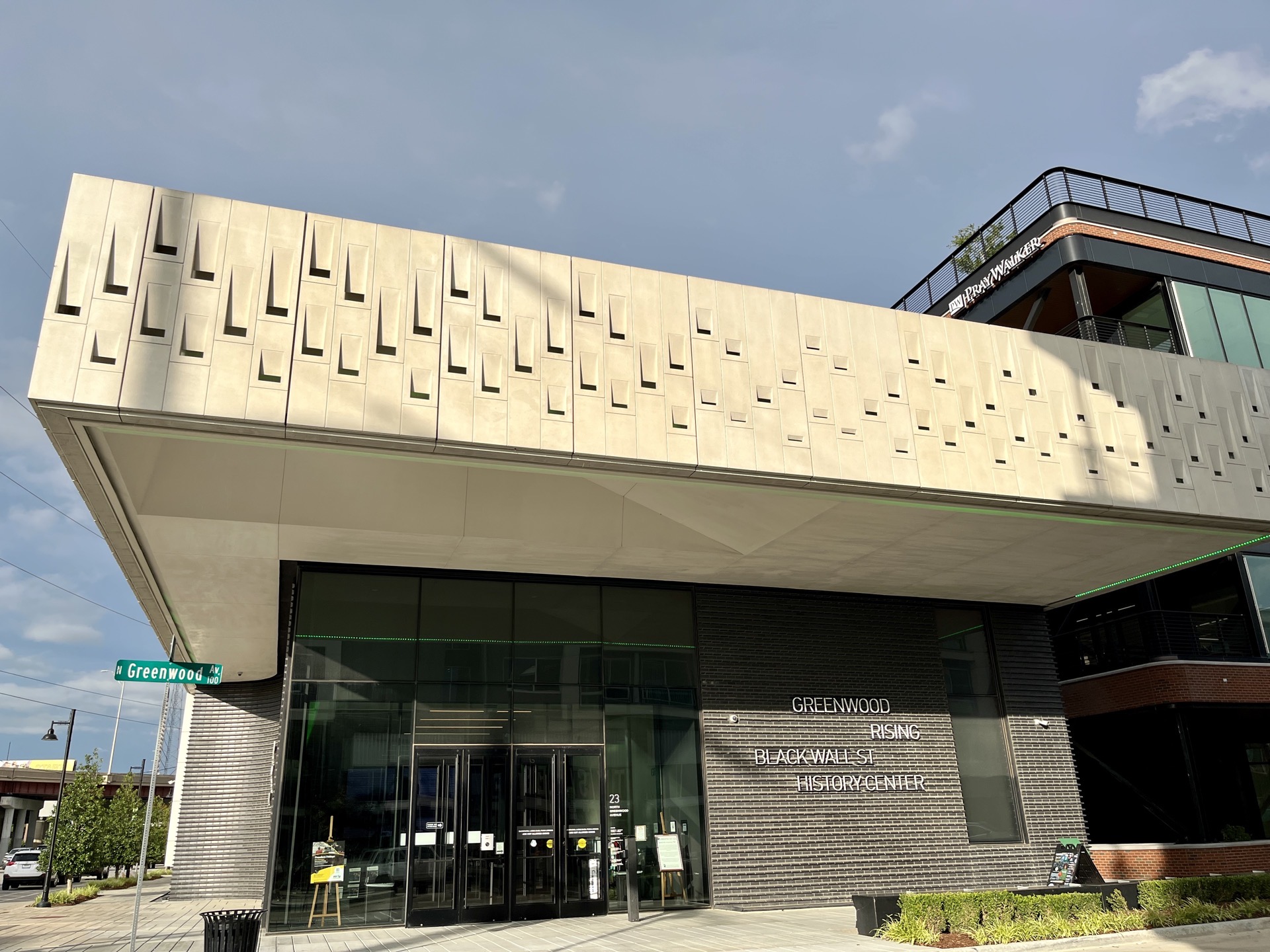
Yes. Greenwood Avenue is still there, just north of downtown Tulsa. Start at Greenwood Rising, the Black Wall Street History Center at 23 North Greenwood Avenue. It opened in June 2021 as the main focus of the 1921 Tulsa Race Massacre Centennial Commission, and its "Building Greenwood" exhibition covers how the district was made in the first place.
Plan to walk. Greenwood Rising, the Greenwood Cultural Center and John Hope Franklin Reconciliation Park are all within walking distance of each other, so you can see all three on foot in the same visit. The Greenwood Cultural Center went up in the 1980s, and Johnson describes it as the anchor of the modern-day district. The park is named for John Hope Franklin, the Tulsa-raised historian who helped write the Commission's report.
Along the avenue you'll find Black-owned shops, restaurants and studios on the same blocks where Greenwood did business a century ago. If you're planning your own trip, our Visiting Tulsa guides cover where to start.
What does our Tulsa trip include on Greenwood?
Our Black Wall Street, Tulsa trip runs April 28 to May 2, 2027, and day two is built around Greenwood. We visit Greenwood Rising, take a walk-and-ride tour of Black Wall Street led by people who carry its story personally, and finish the afternoon at John Hope Franklin Reconciliation Park.
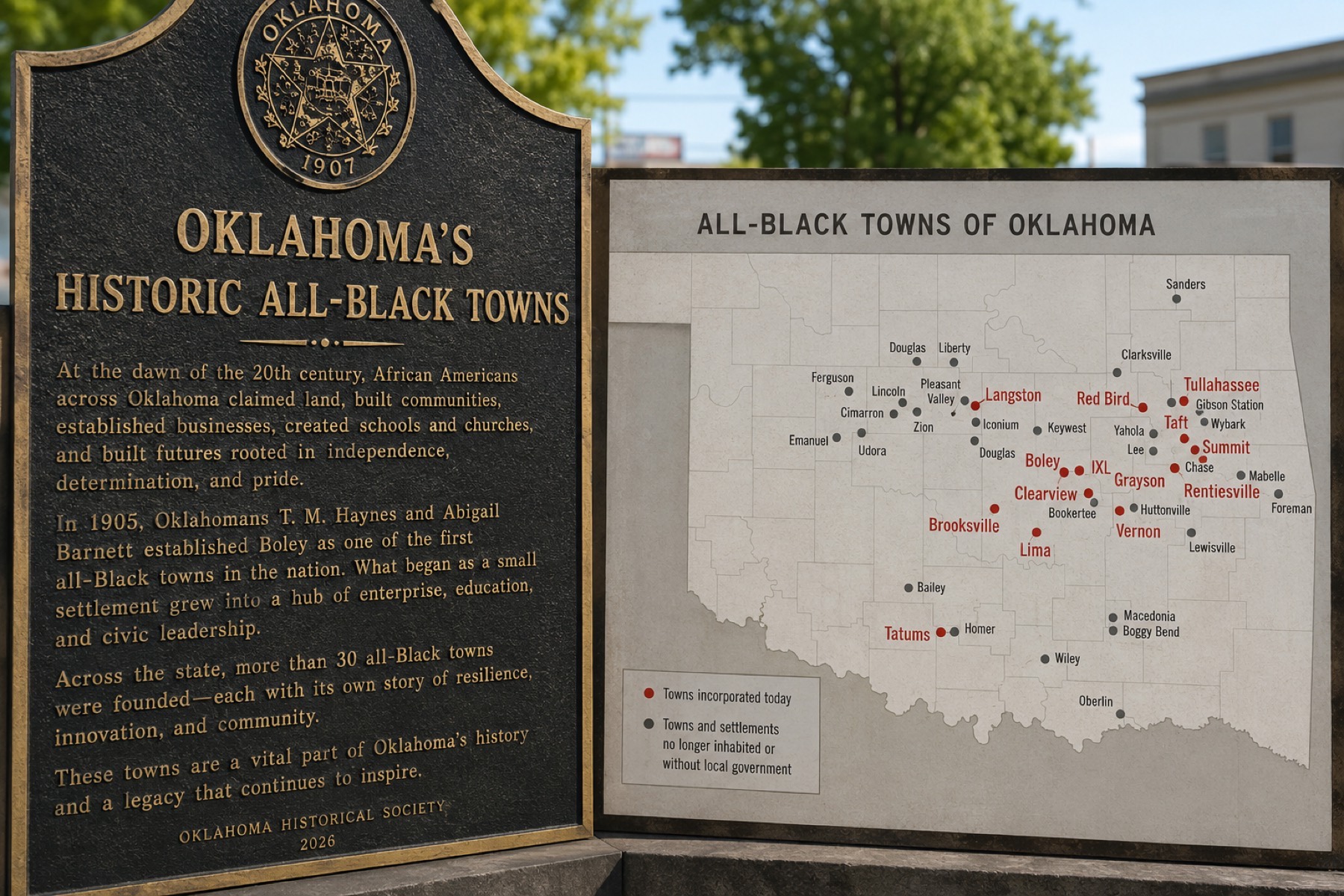
On day three we ride out to Langston, home of Oklahoma's only HBCU, and to historic Boley, two of the state's all-Black towns. Day four is a free day on Greenwood, with time for the Black-owned businesses along the avenue.
We built it that way on purpose. Gina said on our September 2026 launch call that Black Wall Street Travel exists "because I wanted us to see the world through our own history [...] I wanted to support our community and our Black businesses, and experience this beautiful world without us being left out of it."
You can see the full itinerary on our Black Wall Street, Tulsa trip page.
Frequently asked questions
Was Black Wall Street rebuilt after the 1921 massacre?
Yes. Greenwood's residents began rebuilding within weeks, and the city began issuing building permits to Black residents of North Tulsa in early July 1921. By 1942 the district had 242 Black-owned and Black-operated businesses, according to historian Hannibal B. Johnson.
How long did it take to rebuild Black Wall Street?
Rebuilding started in the summer of 1921 and went on for years. Business owners on Deep Greenwood were generally first, more permits likely went to families as the winter of 1921 approached, and some churches took years to finish. By the early to mid 1940s the district was at its peak.
Who rebuilt Greenwood?
Greenwood's own residents did. The 2001 Commission report found that the city and county did not contribute substantially to rebuilding, that city officials initially tried to block it, and that the work "was left to the victims of that destruction."
Why did Black Wall Street decline after it was rebuilt?
Hannibal B. Johnson points to integration, urban renewal, a new business climate and the aging of the district's founders, with the decline running from the 1960s into the early 1980s. Advocates have also tied it to Interstate 244, which was built through the district starting in the late 1960s.
Does Black Wall Street still exist today?
Greenwood Avenue still exists, and Black-owned businesses still operate there, though the district is much smaller than it was at its peak. Visitors can tour Greenwood Rising, the Greenwood Cultural Center and John Hope Franklin Reconciliation Park, all within walking distance of each other.
Can you tour Black Wall Street?
Yes. Greenwood Rising, at 23 North Greenwood Avenue, is open to the public, and local guides lead walking tours of the district. Our group trip to Black Wall Street, Tulsa includes Greenwood Rising, a walk-and-ride tour of Black Wall Street and a day trip to the all-Black towns of Langston and Boley.
Sources
- Oklahoma Commission to Study the Tulsa Race Riot of 1921. Tulsa Race Riot: A Report by the Oklahoma Commission to Study the Tulsa Race Riot of 1921. Oklahoma Historical Society, February 28, 2001.
- Larry O'Dell, "Riot Property Loss," in the Commission report above (2001), pp. 143 to 150.
- Hannibal B. Johnson, "Greenwood District," The Encyclopedia of Oklahoma History and Culture, Oklahoma Historical Society. Published January 15, 2010, last updated July 29, 2024.
- Elizabeth Caldwell, "Local Historian Speaks About Greenwood's History," Public Radio Tulsa, May 18, 2021.
- Ben Abrams, "Tulsa mayor says city should consider changes to highway over Greenwood," Public Radio Tulsa, June 4, 2025.
- Greenwood Rising, Black Wall Street History Center (official site). Accessed October 28, 2026.
- KTUL, "Tulsa welcomes Greenwood Rising history center," June 2, 2021.
- Downtown Tulsa Partnership, "Greenwood Cultural Center" listing (address and distances to nearby sites). Accessed October 28, 2026.
- Gina Woods, remarks on the Black Wall Street Travel launch call, September 20, 2026.
Walk Greenwood with us, April 28 to May 2, 2027.
Turn the Page
Let the Story Lead You There
Explore the destinations behind the journal, or start planning a journey of your own.