Travel Tips
San Basilio de Palenque: What to Know Before You Visit Colombia's Free Black Town
Black Wall Street Travel · October 28, 2026 · 8 min read
Short answer
San Basilio de Palenque is a Black town in Colombia's Bolívar department, about 50 kilometers southeast of Cartagena. Africans who freed themselves from slavery founded it in the 1600s, and UNESCO says it's the only one of the many palenques that once existed to survive. Its people still speak Palenquero, a Spanish-based creole with Bantu roots.
How did San Basilio de Palenque begin?
Palenque began as a refuge. In the 1600s, Africans enslaved in and around Cartagena escaped into the hills and swamps and built fortified settlements. The Spanish called them palenques, after the wooden palisades around them. In UNESCO's words: "Palenque de San Basilio was one of the walled communities called palenques, which were founded by escaped slaves as a refuge in the seventeenth century. Of the many palenques that existed in former times, only San Basilio has survived until the present day."
Palenque's own tradition names Benkos Biohó as its founder. Colombia's Ministry of Culture says his name runs all through the town's oral history, as the man who led its ancestors to freedom in the marshy lands of the Montes de María. Radio Nacional de Colombia, the public broadcaster, gives the dates. He escaped Cartagena in 1599 with his family, was captured in 1619, and was hanged in Cartagena on March 16, 1621.
The same account puts his own settlement in the swamps of La Matuna. It also says San Basilio claimed him as its founder in 1691, the year the town won recognition of its autonomy. Not every scholar accepts that link. Linguist Armin Schwegler, who has studied Palenque since the 1980s, writes that the founder story is almost certainly a product of poetic imagination rather than historical fact, which is why we call Benkos Biohó Palenque's founding figure by tradition. The town still sings about him. When KJZZ's reporters visited in 2016, they met a four-year-old who was already singing about him in Palenquero.
Is Palenque the first free Black town in the Americas?
You'll see that title on most pages about Palenque, and it isn't settled. Colombia's Ministry of Culture writes that San Basilio is widely known as the first free town in the Americas. Yanga, in Veracruz, Mexico, makes the same claim. JSTOR Daily reports that Yanga's people won a battle against Spanish troops in 1609 and a treaty with the Spanish Crown in 1618, and that the town has held a festival for the "First Free Pueblo in America" since 1976.
We'd rather not pick a winner in that argument. We call Palenque one of the first free Black towns in the Americas, and we stick to what UNESCO confirms: many palenques were built, and San Basilio is the one that survived. It has been there for more than three hundred years.
Gina said this about Palenque's history on our September 2026 launch call: "It goes against every image that was put before us here in America as Black people."
What language do they speak in Palenque?
People in Palenque speak Spanish and Palenquero, a creole language with mostly Spanish vocabulary and grammar shaped by the Bantu languages of Central Africa. UNESCO describes Palenquero as "the only creole language in Latin America with a lexical Spanish basis" and Bantu grammatical features. Schwegler, writing in the Atlas of Pidgin and Creole Language Structures, says the core of Palenque's founding population spoke Kikongo, and that Kikongo may have been the only significant African language behind it.
For a while, the language nearly stopped being passed down. Schwegler writes that starting around 1960, many native speakers stopped teaching Palenquero to their children, and at times forbade them to use it. KJZZ reported in 2016 that by the late 1970s young people had dropped it, and many adults saw speaking it as backward. Palenqueros who went to Cartagena and Barranquilla had been mocked for it.
Young community leaders turned that around. They sat down with elders and convinced them that the people laughing in the cities were the ignorant ones. Two teachers began teaching Palenquero in school without permission from the principal or education officials, more teachers joined them, and officials eventually came around.
Schwegler put the share of residents who actively speak it at about half, and wrote that many teenagers now take real pleasure in learning it.
"The language is the foundation of Palenquero culture; the language is like the main artery for passing on the whole culture and all the values of the community."Maria de los Santos, Teacher of Palenquero to children from preschool through third grade in San Basilio de Palenque · Translated from Spanish. Speaking to KJZZ's Fronteras Desk, March 22, 2016
What is Palenque known for today?
Palenque is known for its music and for its kuagros. A kuagro is an age group. Colombia's Ministry of Culture says kuagros form when children start playing together in the street outside their homes. Each one gets a name from its members and a leader for life, and belonging to one comes with rights and duties that carry from childhood into adult life.
Then there's the music. UNESCO names bullerengue sentado, son palenquero and son de negro among the traditions that accompany baptisms, weddings, religious festivals and ordinary good times. Radio Nacional de Colombia credits Palenque with son palenquero, which took Cuban rhythms and made them local. It also names major champeta artists born in the town, including Louis Towers, Viviano Torres and Charles King, and lists Sexteto Tabalá among its representative groups.
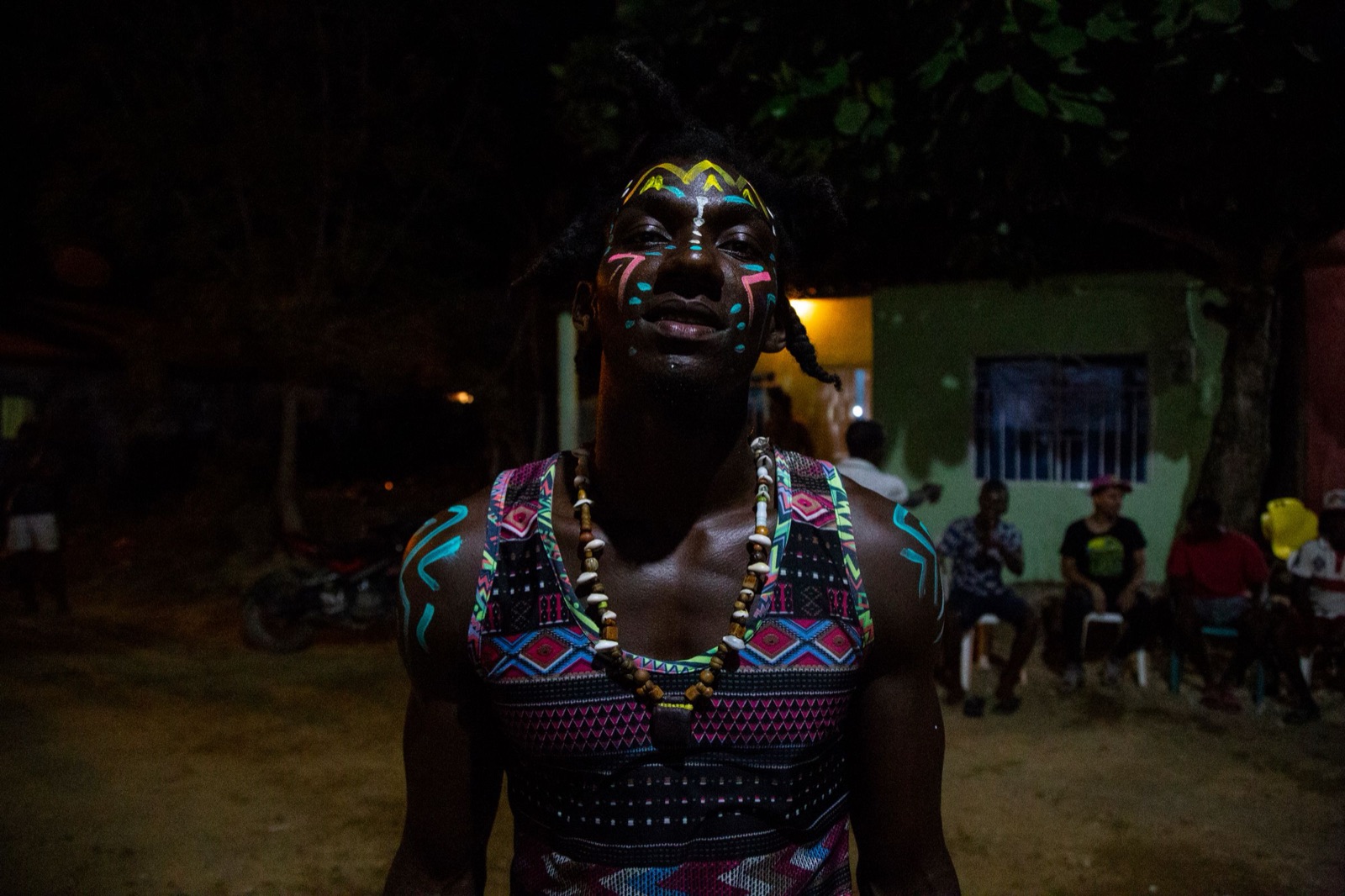
Colombia's census counts Palenqueros by name. DANE, the national statistics agency, counted 7,470 people who identified as Palenquero in 2005 and 6,637 in 2018. In 2005, about two thirds of them lived in Bolívar, according to the Ministry of Culture. They are part of a much larger group that DANE counts as Black, Afro-Colombian, Raizal and Palenquero.
Black, Afro-Colombian, Raizal and Palenquero population of Colombia (DANE)
| Count | People |
|---|---|
| 2005 census | 4,311,757 |
| 2018 census, as counted | 2,982,224 |
| 2018, DANE's official estimate | 4,671,160 |
Note: the 2018 census missed a large share of this population. Answers to the census question on Black, Afro-Colombian, Raizal or Palenquero identity fell 30.8% from 2005, and DANE later said an omission had affected the count. In 2019 DANE declared 4,671,160 the official 2018 figure, an estimate drawn from its 2018 Quality of Life Survey, equal to 9.34% of Colombia's population. The middle bar reflects that undercount.
Source: DANE (Colombia's national statistics agency), 2019 and 2022
Sources: DANE, "Visibilidad estadística: población negra, afrocolombiana, raizal y palenquera" (June 2022), and DANE, "Población negra, afrocolombiana, raizal y palenquera" (November 6, 2019).
How do you visit Palenque from Cartagena?
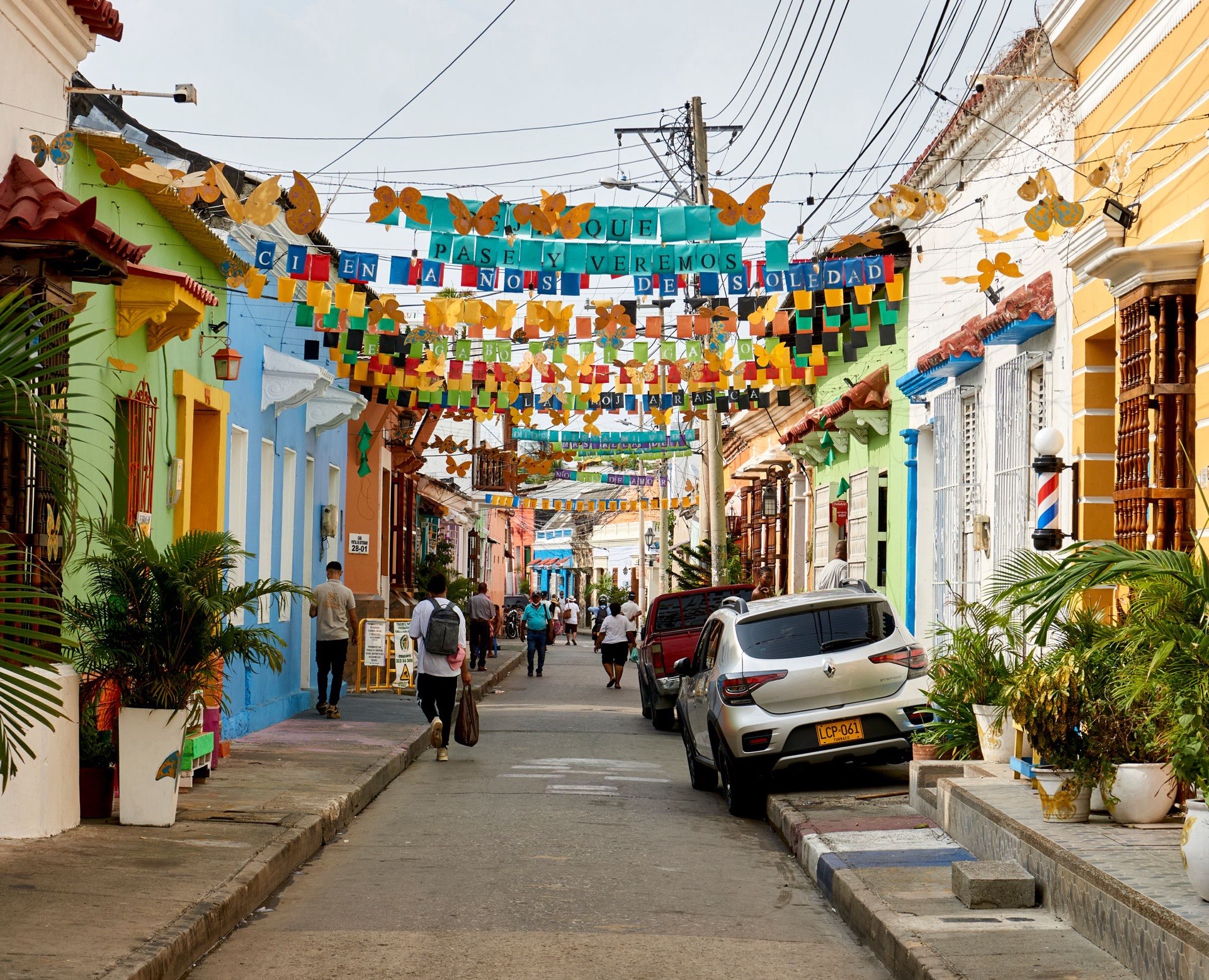
From Cartagena, Palenque makes an easy day trip by road. It sits about 50 kilometers southeast of the city, in the foothills of the Montes de María, so plan on an hour or more on the road each way, depending on traffic. You may already know the name from the palenqueras who sell sweets on Cartagena's streets.
Palenque is a home town where families live and work, with two neighborhoods, Barrio Arriba and Barrio Abajo, divided by the church and the health post. That shapes how we tell our travelers to show up.
Go with a guide from Palenque, so the history comes from the people who own it and the money stays in town. Ask before you photograph anyone, children included, and take no for an answer. Eat lunch in town, and buy music or crafts from the people who make them.
If drums start, enjoy them. Just keep in mind that this music marks real weddings, baptisms and festivals, and you're a guest at something that matters to the families playing it.
What does our Cartagena trip include in Palenque?
Day four of our Cartagena trip, January 13 to 18, 2028, is our Palenque Heritage Day. We ride out from Cartagena and spend the day in San Basilio de Palenque, where you'll hear its drums, its language and its story from the descendants who carry it. Lunch in Palenque is included.
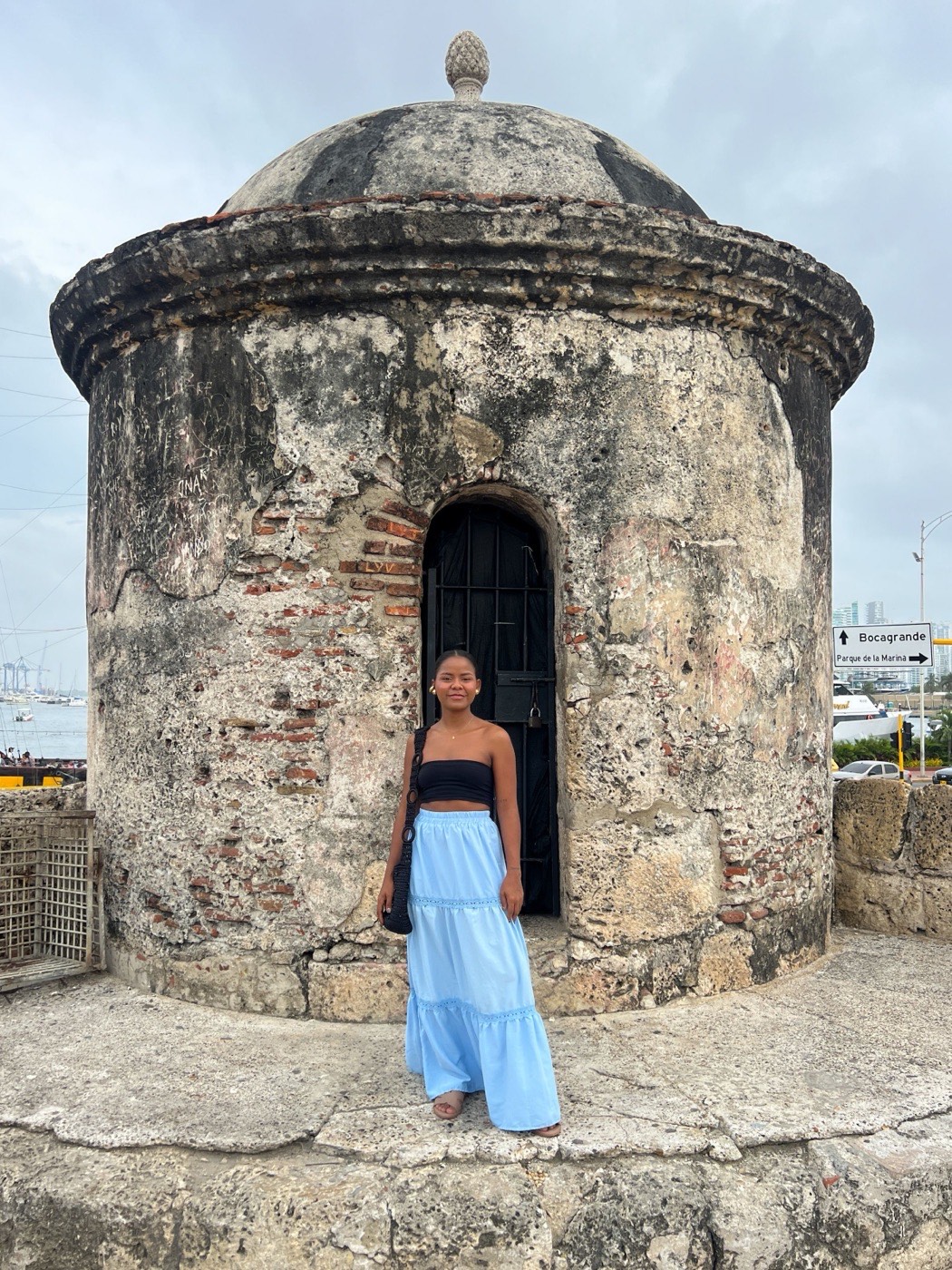
The days before it lead up to that visit. On day two we take a tour of the Walled City and Getsemaní centered on Cartagena's Black history, and the day ends with a champeta and salsa class, so the music in Palenque already feels familiar when you get there.
Gina explained why on our September 2026 launch call: "African people in Colombia, when you look at them surviving slavery, not just surviving it, but escaping it and building these free communities and protecting their culture, that's nothing we know anything about here in America."
You can see the full itinerary on our Colombia trip page. If you'd rather visit Palenque on your own dates, we also plan private trips.
Frequently asked questions
Is San Basilio de Palenque worth visiting?
Yes, if you go to learn. UNESCO says it's the only one of the many palenques of former times that has survived, and its people still speak their own language and keep their own music and social traditions. A guided day trip from Cartagena gives you time for the history, a meal and the music.
How far is Palenque from Cartagena?
About 50 kilometers southeast, according to Colombia's Ministry of Culture. Plan on an hour or more on the road each way, so most travelers make it a day trip.
What language do they speak in Palenque?
Spanish and Palenquero. Palenquero is a creole with mostly Spanish vocabulary and Bantu grammatical features, and linguists trace its African roots mainly to Kikongo. Teachers in Palenque have taught it in school since the 1990s.
Is San Basilio de Palenque the first free town in the Americas?
It's widely called that, but the title is contested. Yanga, in Mexico, makes the same claim. What UNESCO confirms is that San Basilio is the only one of the many palenques of former times that survived to the present day.
Who founded San Basilio de Palenque?
Africans who freed themselves from slavery in the 1600s. Palenque's oral tradition names Benkos Biohó as its founder. According to Radio Nacional de Colombia, he escaped Cartagena in 1599 and was hanged there in 1621, and the town claimed him as its founder when it won recognition in 1691. Some scholars, including linguist Armin Schwegler, doubt that the founder story is historical.
Do you need a tour to visit Palenque?
It's a town where families live and work, so a tour isn't the only way to go. We still recommend going with a guide from Palenque, so the history comes from the community and your visit supports it.
Sources
- UNESCO, "Cultural space of Palenque de San Basilio," Representative List of the Intangible Cultural Heritage of Humanity (proclaimed 2005, inscribed 2008). Accessed October 28, 2026.
- Ministerio de Cultura de Colombia, "Palenqueros, descendientes de la insurgencia anticolonial" (characterization of the Palenquero community).
- Felipe Arias Escobar, "La muerte de Benkos Biohó: 400 años de resistencia afrodescendiente," Radio Nacional de Colombia, March 16, 2021.
- Radio Nacional de Colombia, "San Basilio de Palenque: su música y sus músicos," July 15, 2019.
- Karen Juanita Carrillo, "Mexico's First Liberated City Commemorates Its Founding," JSTOR Daily, October 20, 2021, updated December 3, 2025.
- Armin Schwegler, "Palenquero," survey chapter, Atlas of Pidgin and Creole Language Structures Online (APiCS).
- KJZZ Fronteras Desk, "Saving Palenque: How A Tiny Colombian City Revived Its Native Tongue," March 21, 2016.
- KJZZ Fronteras Desk, "Saving Palenque: Revolutionary Teachers, Music Keep The Lengua Alive," March 22, 2016.
- DANE, "Visibilidad estadística: población negra, afrocolombiana, raizal y palenquera," June 2022.
- DANE, "Población negra, afrocolombiana, raizal y palenquera: resultados del Censo Nacional de Población y Vivienda 2018," November 6, 2019.
- Gina Woods, remarks on the Black Wall Street Travel launch call, September 20, 2026.
Spend a day in Palenque with us, January 13 to 18, 2028.
Turn the Page
Let the Story Lead You There
Explore the destinations behind the journal, or start planning a journey of your own.